Book a call

Your customer is the lead.

Every character in the series is one ICP — built from that segment's frustration, objection and buying moment. The plot is your funnel. Three episodes a week. The cast is yours.

Book a call
Built by a streaming showrunner, not an ad agency.

Every month you burn money renting someone else's audience.

The influencer posts. Three days of noise. Then silence.

Your buyer still doesn't know you exist. Next month he has to meet you again from scratch.

And nobody watched it twice.

One ICP. One character.

Characters aren't invented here. They're derived.

Your ICPs already exist — you just have them as slides. I turn each one into a person: their frustration becomes the story, their objection becomes the conflict, the moment they'd actually buy becomes the ending.

The character never pitches. It shows the moment the problem stops.

That's why people watch it — it's about them. And that's why it sells — it's built from why they don't.

Each of these is one of your customers.

eight half-used bottles, still the same skin

wants it, waiting for a reason to deserve it

bought it from a reel, opened it once

orders three sizes, returns all three

reads the label, trusts nobody

Tap any clip for sound

A series, not a campaign.

A character per ICP. Derived from the segment, not invented for it.

A world with rules. So month six still belongs to the same story as month one.

Three episodes a week. One minute each, real performers, your product inside the story at the moment it's needed.

You own all of it. Characters, world, footage. In writing, from day one. They don't leave. They don't raise their rate. They never post anything you'll have to apologise for.

The cast is your ICP map.

Your market isn't one person. It's four or five who don't share a problem.

Add a segment, add a character. Cover your market, and they start turning up in each other's episodes.

The first character is the first citizen of your world — not a one-off.
eight half-used bottles, still the same skin
bought it from a reel, opened it once
wants it, waiting for a reason to deserve it
orders three sizes, returns all three
reads the label, trusts nobody
your next segment

A clip is spent. A series compounds.

A UGC actor films one review. It runs, it's spent, and the next one starts from nothing.

A series accumulates. Episode ten converts the people who scrolled past episode one — because by then they know who this person is and want to see how it goes.

One is an expense. The other is an asset on your side of the balance sheet.
Here's what you get

Your own sales universe, with exclusive characters.

A character your buyers recognise.

A world that can hold the next three.

A clear read on whether this segment responds.

All of it yours, permanently.

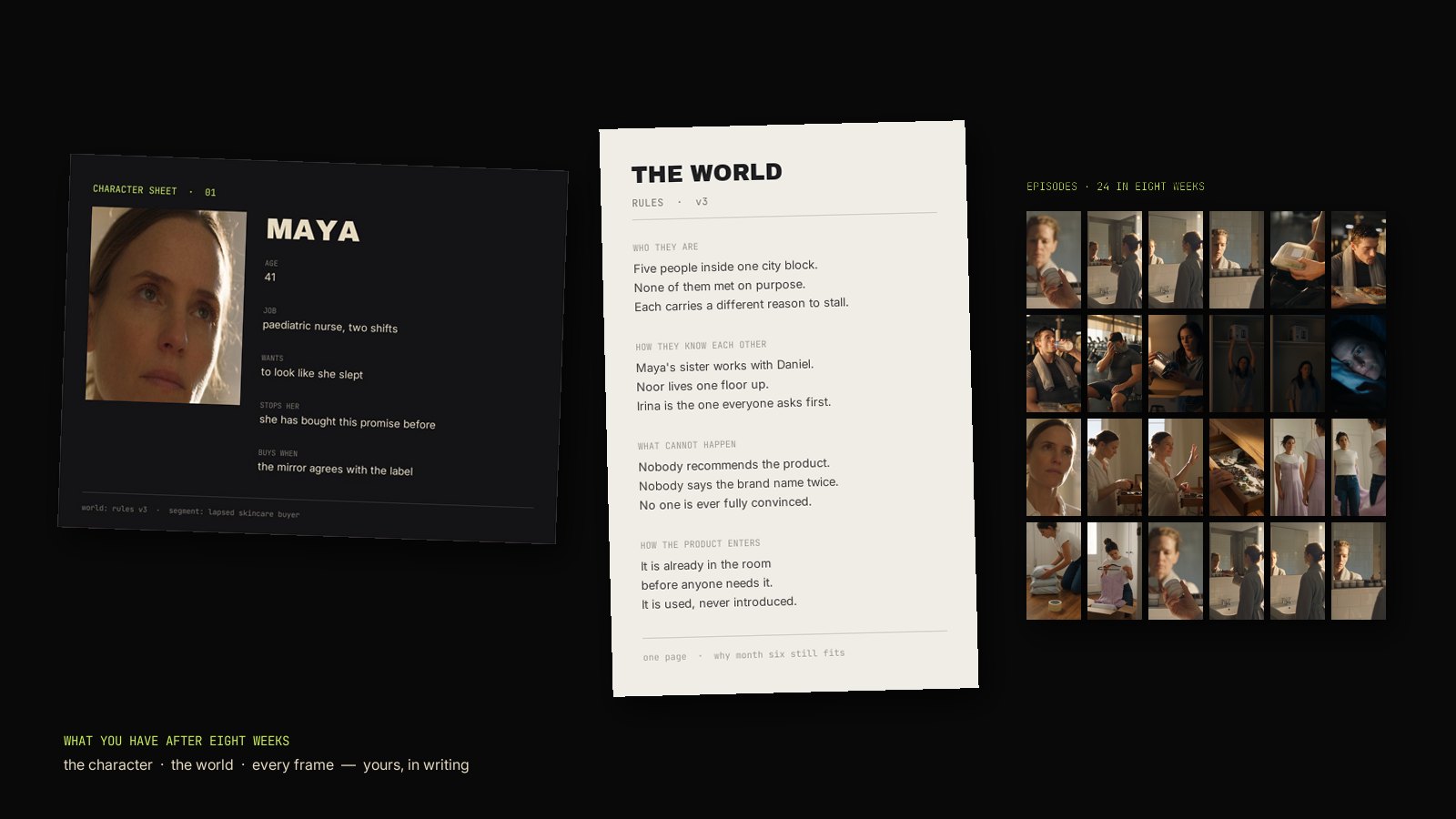
The character sheet, a page of the world document and the episodes, laid out together.

And if the segment doesn't respond, you know that in eight weeks instead of a year.

For twenty-five years my job was making you watch the next episode.

Producer, showrunner, Head of Originals at a major streaming platform. The entire job was one problem: give the viewer a reason to come back.

No advertising agency has ever been asked to solve that. It was never their brief.

Originals commissioned and supervised at a major streaming platform.

Same craft that found the reason inside two hundred characters. Now pointed at your product.

Four steps.

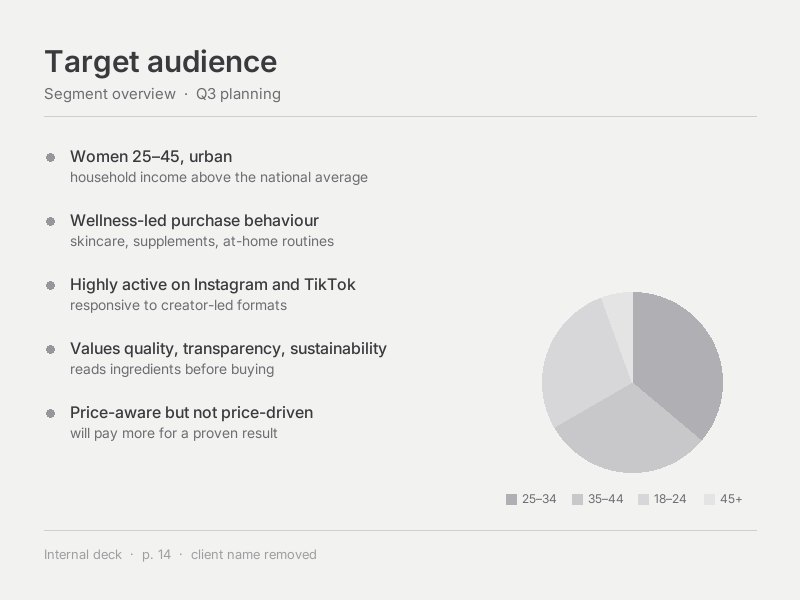
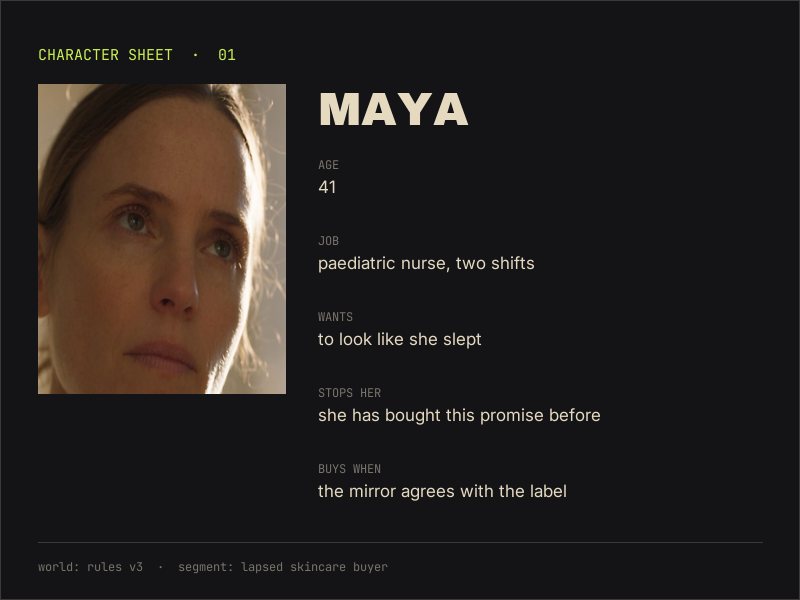
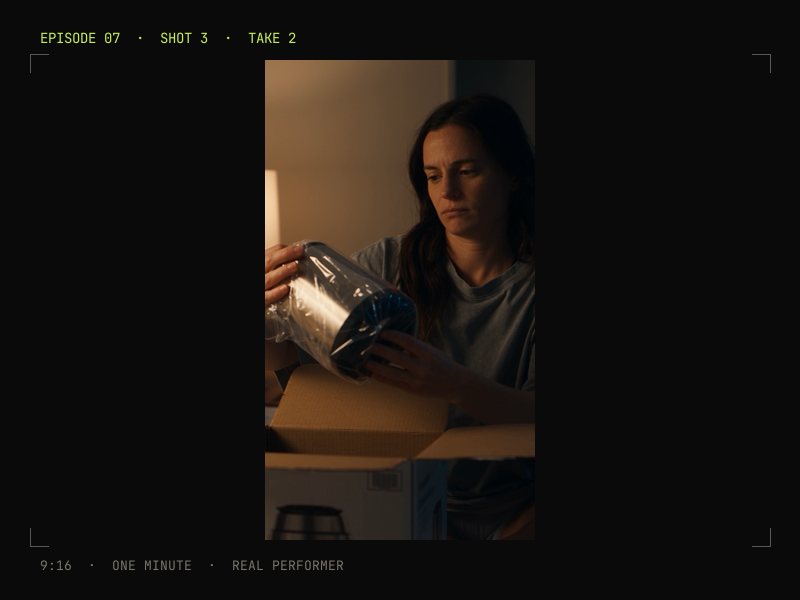
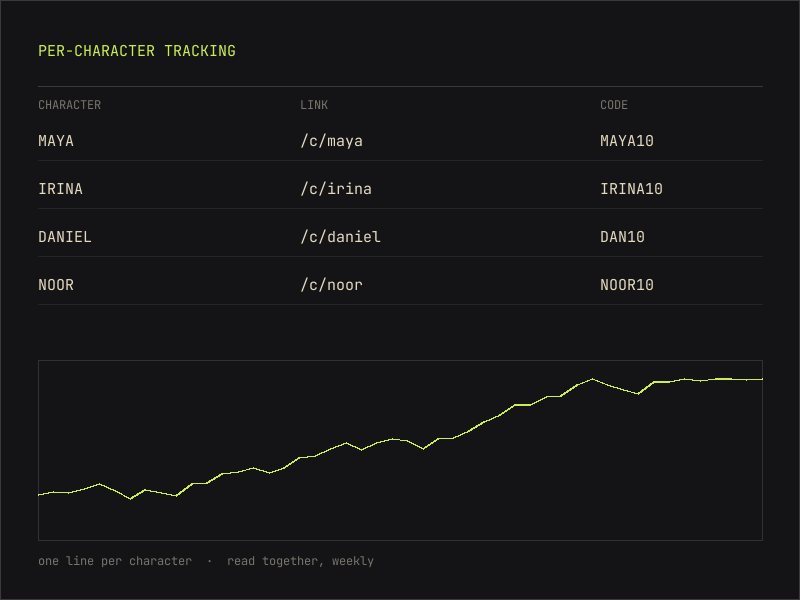
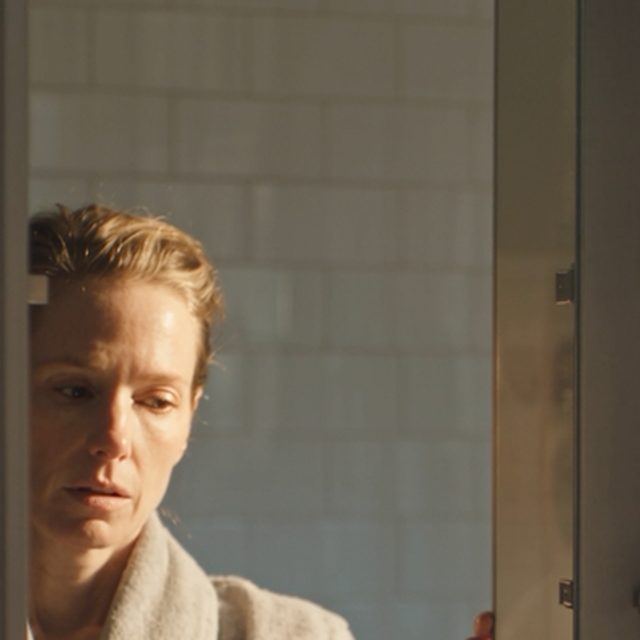
A client's audience slide — the before state, redacted. A character sheet: portrait, age, job, what she wants, what stops her. A frame from an episode, shot in progress. Per-character tracking: name, link, code.
1

Find the real buyer. Not demographics — the exact moment your product exists to end.

2

Build the character and the world. A person worth watching, and the rules that keep them consistent.

3

Film. Real performers, digital characters, three a week.

4

Tune. Each character gets its own link, code and landing page, so what it brings is visible separately from everything else you run. A character that doesn't pull gets rewritten — different frustration, different moment, different entry for the product. Included, not billed.

The character never says buy this. It shows the moment the problem stops — and that moment is your product.

Week 1 Discovery
Weeks 2–3 Character build
and world
Week 4 First episodes
live
Weeks 5–8 Full rhythm,
first read

Live inside a month · Two to three months for a real read on what sells

The Pilot

$12,000 $5,000

3 of 3 remaining

First three clients. I don't have case studies for this yet — so the first three pay less, and keep this rate for good.

One character · one segment · eight weeks

The first three set their price for good.

In exchange: I publish the work as a case study, you put your name to a testimonial, and you introduce me to two people.

Not a discount. You take the risk of hiring someone with no track record in this. I take the risk of building it in public.

I'm not selling you a sales number. I guarantee the cast, the world and the rhythm. What your buyers do about it, we measure together — honestly, from week one.

After the pilot: ongoing, monthly, from two characters. Discussed on the call.

I'll say no to most of these.

If you need it cheap. People generate clips for a fraction of this. Nothing accumulates, but if that's the goal, they're the right call.

If a committee decides. This needs one person who can look at a character and know.

If your product doesn't solve anything. I can build a character around a real problem. I can't invent one.

Thirty minutes. Bring your buyer, not your budget.

Two things: who you're trying to reach, and by when they need to know you.

A launch, a season, a round, a new market. If there's no date, this probably isn't urgent yet — and I'd rather we both find that out in thirty minutes than in eight weeks.

Book a call
hello@vadlevin.com

Reply within 24 hours